
Smile Makeover: Do You Really Need Veneers? | SmileBay Specialist Centre
July 15, 2026
The Implant Looks Fine… So Why Doesn’t It Feel Right? Understanding What Truly Defines a Successful Dental Implant
July 22, 2026Root canal or Dental Implant? A Specialist Guide | SmileBay Specialist Centre
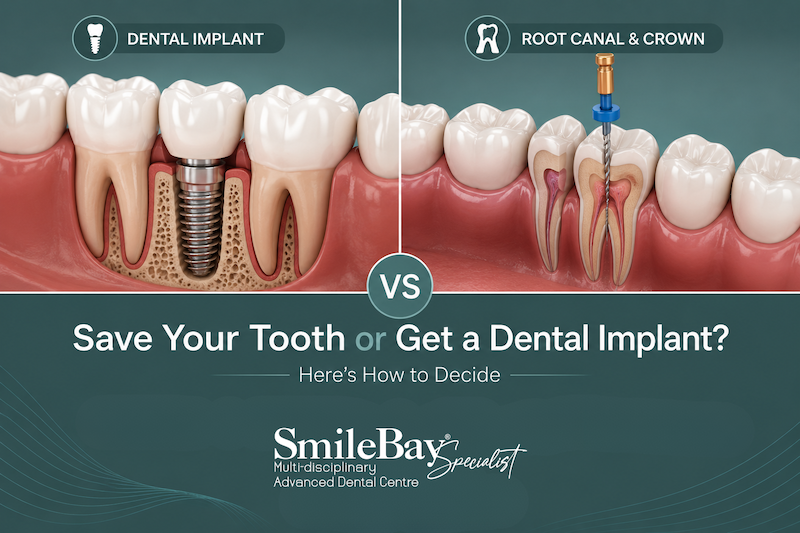
Save tooth or dental implant? It's one of the biggest decisions patients face when a damaged or infected tooth needs treatment.
The truth is, there isn't a "one-size-fits-all" answer.
Both treatments can be successful. Both have limitations. The right choice depends on your tooth's condition, long-term outlook, and your individual needs—not fear, pressure, or marketing.
Can Your Tooth Be Saved?
The first question isn't "Should I get an implant?"
It's "Does this tooth have a good long-term prognosis?"
A proper assessment should look at:
- Whether the tooth is cracked
- Bone and gum support
- Presence of infection
- Whether the tooth can be restored properly
- Bite forces and teeth grinding
A tooth that's technically treatable isn't always the best tooth to keep
When Saving the Tooth Is a Good Option?
Saving your natural tooth may involve:
- Root canal treatment
- Gum treatment
- A crown or onlay
If the tooth has good bone support, healthy gums, and can be restored well, keeping your natural tooth is often the preferred option.
Natural teeth have advantages that implants cannot fully replace, including the ability to sense pressure when chewing.
When an Implant May Be the Better Choice?
Sometimes a tooth has a poor long-term prognosis because of:
- Vertical root fracture
- Severe bone loss
- Extensive damage that cannot be restored
In these situations, removing the tooth and replacing it with a dental implant may provide a more predictable long-term solution.
However, implants are not "better" than healthy natural teeth. They also require good oral hygiene, regular maintenance, and healthy gums to last.
Ask These Questions Before Deciding:
Before choosing either treatment, ask your dentist:
- Can this tooth realistically be saved?
- What is the long-term prognosis?
- What are the risks and benefits of each option?
- How long will each treatment take?
- What would you recommend if this were your own tooth?
A good dentist should be able to explain the reasoning behind every recommendation.
Beware of Rushed Decisions
Consider seeking a second opinion if:
- Only one treatment option is offered
- You feel pressured to decide immediately
- The diagnosis isn't clearly explained
- Long-term maintenance isn't discussed
Good dentistry should never feel rushed.
Conclusion:
Whenever a tooth has a reasonable chance of lasting, saving it is often worth considering first.
If the tooth has a poor prognosis, a dental implant may be the more predictable long-term solution.
The best decision is one based on accurate diagnosis, honest discussion, and realistic expectations, not on speed or sales pressure.
Still unsure? A structured consultation or second opinion can help you understand all your options before making a lifelong decision.